
This case study by DMU’s Dr Lis Ku explores Education for Sustainable Development in psychology education, and her practice in embedding ESD into diverse psychology educational practices.
When people hear the word sustainability, many still think only of recycling, carbon emissions, or protecting the natural environment. These are, of course, important issues. Yet sustainability is not only about the planet. It is also about people, communities, health, behaviour, and the kind of future we are creating together. In that sense, sustainability should be central to psychology.
Across higher education, Education for Sustainable Development (ESD) has grown in visibility. However, in psychology the connection is sometimes less obvious to students. Many arrive assuming sustainability belongs to environmental science, geography, or engineering, but has little relevance to the study of mind and behaviour. This is understandable, but it misses something fundamental. Nearly every sustainability challenge involves human psychology: how people make decisions, what motivates behaviour change, how habits form, why values differ, how inequalities shape choices, and what helps individuals and communities flourish.
Psychology helps us understand why people consume more than they need, why sustainable options are not always chosen, and how social norms can either hinder or accelerate positive change. It also helps us explore the relationship between lifestyle, meaning, and well being. Ecological well being and psychological well being are not competing goals. They are often deeply connected. A society built on chronic overconsumption, stress, inequality, and disconnection is unlikely to be sustainable in any meaningful sense.
Bringing Sustainability into Psychology Education
Because of this, one of our priorities has been to embed sustainability into psychology in practical and meaningful ways. This means not treating it as an optional extra, but integrating it into teaching, research, and community engagement.
In my own teaching, I have incorporated sustainability themes across all three years of the undergraduate psychology curriculum, allowing students to revisit and deepen their understanding as they progress through their degree.
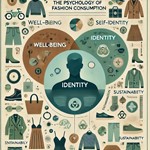
In the first year, I begin with two introductory lectures on fashion consumption. These sessions encourage students to think differently about clothing as a psychological and social phenomenon rather than simply an everyday necessity. We explore the human and environmental costs of the fashion industry, why clothing can become tied to identity, why trends can drive overconsumption, and how values shape consumer choices. Recently, some students told me that these lectures had changed how they viewed sustainability and sparked their interest in the topic. Hearing that was genuinely encouraging. It reminds us that even a relatively brief introduction can open new ways of thinking and help students see the relevance of psychology beyond the classroom.

In the second year, students engage with these issues in greater depth by examining sustainable alternatives and considering how psychology can contribute to positive change. Here, the focus shifts towards applying established psychological theories and persuasion techniques to understand how attitudes and behaviours can be changed. We explore how insights from social psychology, motivation, behaviour change, and decision making can help encourage more sustainable everyday choices. This helps students recognise that psychology is not only useful for understanding problems, but also for designing solutions.
By the final year, these themes develop into a full topic on materialism, consumption, and well being. Students are challenged to critically evaluate different theoretical perspectives and research traditions, and to develop their own synthesis of how everyday consumption behaviours shape our lives. We examine how patterns of spending and consumption are closely connected to work, leisure, identity, relationships, and our broader sense of happiness and fulfilment. The focus is squarely on psychological well being, but in reflecting critically on what supports a good life, students also begin to consider how changes in our own behaviour can benefit the environment.
Across all three years, the aim is not simply to teach sustainability as a separate topic, but to show that it is deeply connected to some of psychology’s most enduring questions: how people think, what they value, how behaviour changes, and what it means to live well.
This classroom teaching is also supplemented by seminars, webinars, and collaborations with colleagues from many other universities in the UK and overseas. These wider engagements allow students and staff to see how sustainability and well being are being approached across different disciplines, institutions, and cultural contexts, while also creating opportunities for shared learning and new partnerships.
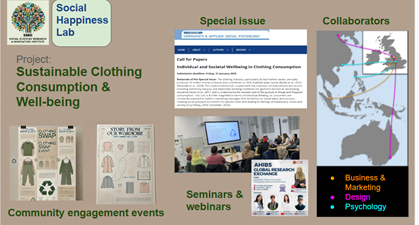
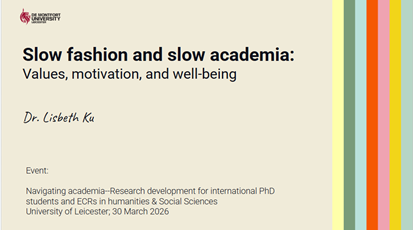
Another area I focus on is applying psychological principles of well being to support students, PhD researchers, and Early Career Researchers beyond psychology. Many of the challenges faced in higher education such as pressure, uncertainty, workload, motivation, and maintaining balance are deeply psychological in nature. By drawing on evidence from well being science, motivation research, and sustainable ways of working, I hope to contribute to healthier and more supportive academic cultures across disciplines.
Beyond the Classroom: Community Engagement
ESD should not stop at the campus boundary. Psychology has much to contribute to communities, schools, and public life.
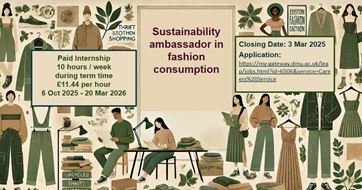
Community engagement is an important part of this work. In my role as the ESD co-lead and a researcher on sustainability, and with the support of many DMU’s innovative schemes such as the Frontrunner scheme and the Seed Grants, my colleagues and I have been developing university students as sustainability ambassadors. By equipping students with knowledge, confidence, and practical skills, we hope they can become active advocates for sustainability within the university and in the wider community. This student leadership element has been especially valuable because it allows sustainability messages to be shared peer to peer and helps students gain meaningful experience through civic engagement.
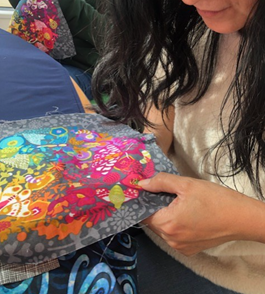
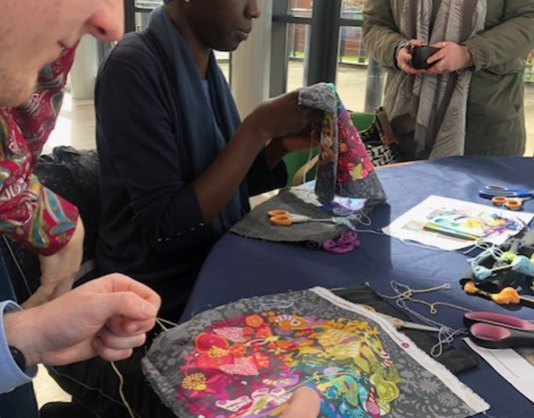
One strand of this work has involved hands-on workshops where participants learn techniques associated with slow fashion and clothing care. These have included sessions on visible mending, repair, and upcycling, helping people develop practical skills while rethinking the idea that clothes are disposable. Such activities show that extending the life of garments can be creative, enjoyable, and empowering. They also demonstrate that sustainability is not only about sacrifice or restriction, but about care, creativity, and making better use of what we already have.

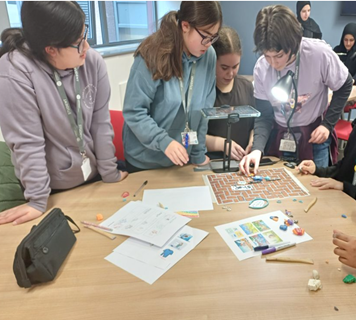
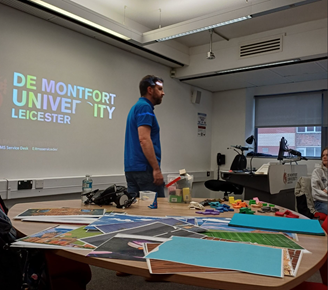
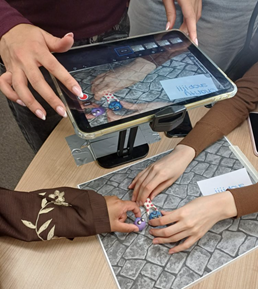
Another strand has focused on storytelling and personal meaning. We have invited the general public to share stories about their favourite piece of clothing and why it matters to them. These conversations often reveal how garments can carry memories, mark important life moments, express identity, or symbolise relationships and belonging. In workshops with secondary school pupils, we used stop motion animation to help young people create stories about clothes and what they mean to us. We also ran similar storytelling activities in the community with young families, creating opportunities for children and parents to think together about possessions, habits, and sustainable choices.

This is where psychology makes an important contribution to ESD. By understanding identity, motivation, emotion, and well being, we can move beyond seeing clothing as either trivial or problematic. Instead, we can help people build healthier and more sustainable relationships with what they wear, relationships that are better for both people and the planet.
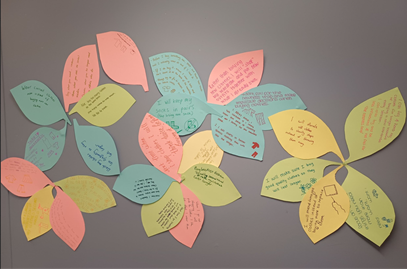
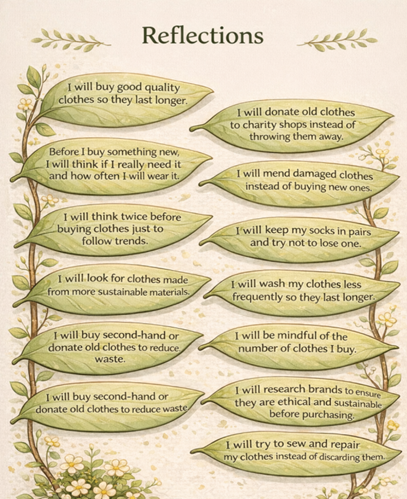
I have been especially heartened to hear reflections from our university students and from school pupils who have taken part in workshops and outreach activities. Many have spoken about recognising, sometimes for the first time, that individual actions do matter. Whether that means repairing a garment, thinking more carefully before buying, reusing what they already own, or influencing others through conversation and example, these moments of reflection are significant. They show that when sustainability is made personal, practical, and meaningful, people begin to see themselves not as passive observers of global problems, but as active participants in positive change.
Looking Ahead
There is still more to do. Sustainability should be more visible across psychology curricula, not only in specialist sessions but across topics such as health, social behaviour, development, identity, education, and mental well being. It should also continue to shape how we think about research partnerships, community collaboration, and student experience.
What has encouraged me most in this role is seeing how quickly perceptions can change when people are given the opportunity to engage. Students who once thought sustainability had little to do with psychology begin to see it everywhere: in behaviour change, in identity, in well being, in inequality, and in the choices we make every day.
Psychology has always sought to understand human behaviour and improve lives. ESD extends that mission by asking how we can support both human flourishing and planetary well being together.
The future of sustainability is not only technological or environmental. It is psychological too.
Lis Ku’s DMU profile page including contact details is here, and you can find Lis on LinkedIn here: https://www.linkedin.com/in/lis-ku-622a40128/