Dr Michelle Ngom is Senior Lecturer for the Masters in Public Health (MSc) programme in Health and Life Sciences at DMU.
The links between the UN SDGs are public health are well-documented: the health of populations shapes not just economic productivity, but social stability and economic growth as well. Policies and social structures determine how populations access healthcare services, and environmental conditions affect what healthcare services are most relevant in a given context. The Masters in Public Health course at DMU addresses a number of different SDGs through its six modules, with mapping of health systems education, future healthcare and public health concepts and leadership to different SDGs within the course. One of the core goals of the course is to train public health professionals who are actively engaged with SDG3 on healthcare, as well as understanding the systemic interactions between public health and sustainable development.
Students are encouraged within the course to understand these systems, for example inequalities in access to preventative public healthcare measures. Environmental conditions are also strongly linked to public health outcomes: healthier populations are commonly populations with better environmental health indicators, for example air quality. In promoting SDG3 on health, students are encouraged to learn how the conditions in which people are born, grow, live, work and age affect their health and well-being throughout their lives. Students are also invited to explore how environmental and lifestyle factors that promote good health and well-being are unevenly distributed in society, and how differential access to, for example, green spaces or affordable fresh food, can affect health outcomes.
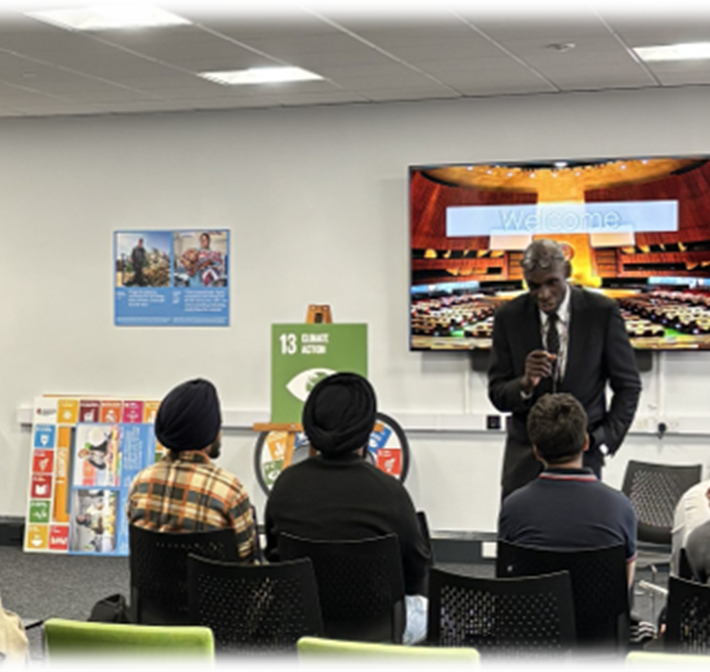
One of the innovative methods used during the course is simulation events. Two examples are the Climate Change simulation, and the Fish Bank simulation. The Climate Change simulation events encourage students to explore climate change and consensus-based decision-making to limit global warming, acting as influential stakeholders in a fictional UN summit, while the he Fish Bank simulation explores the “tragedy of the commons” and its effects.
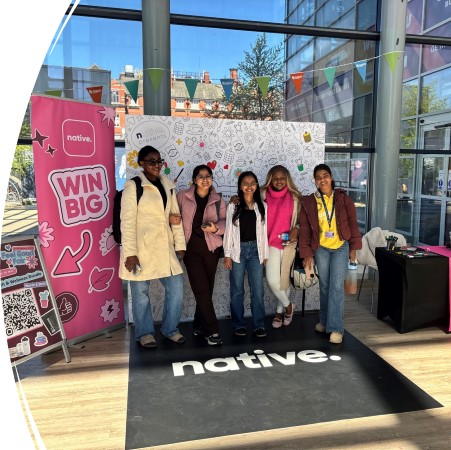
Central to all of these activities is the student experience. Students responded very positively to the opportunities to explore issues around healthcare during the course, and the sustainability-related dimensions of public health. Activities such as visits to UN public health offices in Geneva gave students an understanding of how policy and programmes are formed and transacted on behalf of nations, and inspired students to think outside of their contexts at systemic challenges.